1. What Is Fasting in Ramadan?
Fasting in Ramadan — known in Arabic as Sawm (صَوْم) — is the fourth of the Five Pillars of Islam. Every adult Muslim who is physically and mentally able is required to fast for the entire month of Ramadan, the ninth month of the Islamic lunar calendar.
During the fast, Muslims abstain from food, drink (including water), smoking, and sexual relations from the first light of dawn (Fajr) until the sun sets (Maghrib). Fasting is not merely a physical act — it is a profound act of worship that purifies the soul, sharpens self-discipline, and draws the believer closer to Allah.
يَا أَيُّهَا الَّذِينَ آمَنُواْ كُتِبَ عَلَيْكُمُ الصِّيَامُ
"O you who have believed, decreed upon you is fasting, as it was decreed upon those before you, that you may become righteous [attain taqwa]."
Surah Al-Baqarah 2:183
To understand how fasting fits into the bigger picture of worship, visit our guide to the Five Pillars of Islam.
2. Why Do Muslims Fast? The Spiritual Purpose
Fasting is first and foremost an act of obedience to Allah. But beyond that, it serves as a school of self-discipline — teaching us to master our desires, cultivate empathy for those who go hungry every day, and purify our hearts from heedlessness.
The month of Ramadan is when it is believed the Quran was first revealed to the Prophet Muhammad ﷺ. It is a month of heightened mercy, forgiveness, and closeness to Allah — a spiritual opportunity unlike any other in the year.
"When Ramadan comes, the gates of Paradise are opened and the gates of Hell are closed, and the devils are chained."
Sahih al-Bukhari & Muslim
The ultimate aim of fasting is taqwa — God-consciousness — a sustained awareness of Allah that stays with you well beyond Ramadan itself.
3. Making Your Niyyah (Intention)
Before each day of fasting, you must make a Niyyah — a sincere intention in your heart that you are fasting this day for the sake of Allah. This intention must be formed before Fajr (dawn).
Many Muslims recite the intention aloud during Suhoor to affirm their commitment. Here is the commonly used Niyyah for the obligatory Ramadan fast:
نَوَيْتُ صَوْمَ غَدٍ عَنْ أَدَاءِ فَرْضِ شَهْرِ رَمَضَانَ هَذِهِ السَّنَةِ لِلَّهِ تَعَالَى
"I intend to fast tomorrow in observance of the obligatory fast of the month of Ramadan this year, for the sake of Allah the Exalted."
🌙 Key Point
The Niyyah lives in the heart, not in the words. If you wake up for Suhoor and eat with the intention of fasting that day, your Niyyah is already in place — you do not need to recite a specific formula unless you find it helpful.
4. Suhoor & Iftar: Timing, Rules & Sunnah
Suhoor — The Pre-Dawn Meal
Suhoor (also written Sehri or Sehori) is the pre-dawn meal eaten before Fajr. The Prophet ﷺ strongly encouraged it:
"Eat Suhoor, for indeed in Suhoor there is blessing."
Sahih al-Bukhari & Muslim
- Suhoor ends the moment Fajr begins — not at sunrise. Use a reliable prayer timetable for your city.
- The Sunnah is to delay Suhoor — eating as close to Fajr as possible for maximum reward.
- Suhoor is recommended (Sunnah), not obligatory. You may fast without it, but you miss its blessing.
Iftar — Breaking the Fast
Iftar is the meal that breaks the fast at sunset (Maghrib). The Sunnah is to break the fast immediately when Maghrib enters — do not delay.
"People will remain on good as long as they hasten to break the fast."
Sahih al-Bukhari
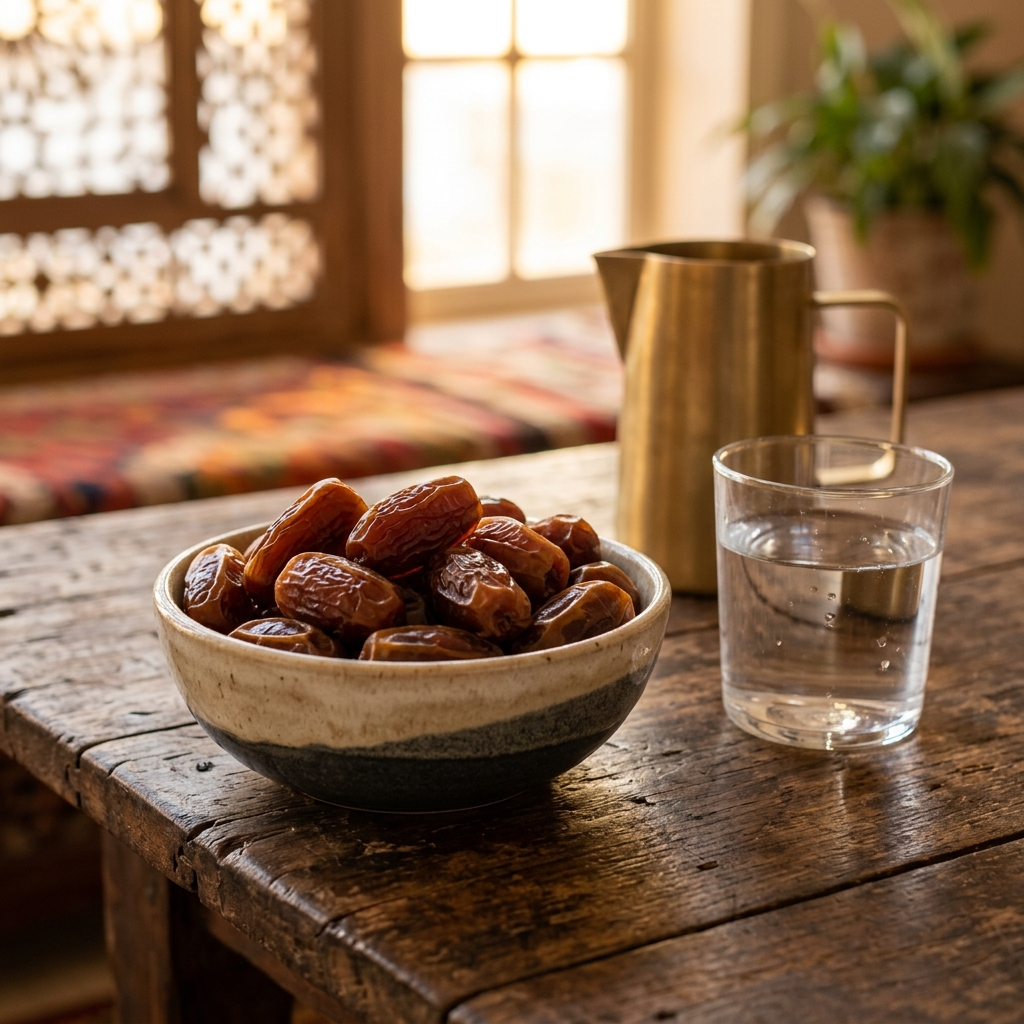
Break your fast with dates and water — this is the prophetic Sunnah. Then perform Maghrib prayer, followed by a fuller meal.
The Dua (supplication) at the time of breaking fast:
ذَهَبَ الظَّمَأُ وَابْتَلَّتِ الْعُرُوْقُ وَثَبَتَ الأَجْرُ إِنْ شَاءَ اللّٰه
"The thirst has gone, the veins have been moistened, and the reward is confirmed, if Allah wills."
Abu Dawud (Hasan)
⏰ Tip: Use a Reliable Timetable
Fajr and Maghrib times vary by city and season. Always confirm exact timings using a trusted local Islamic calendar or a reliable app like Muslim Pro or IslamicFinder for your location.
5. What Breaks Your Fast — and What Doesn't
One of the most common questions for beginners is: what exactly invalidates a fast? Below is a clear breakdown based on scholarly consensus.
| Action | Effect on Fast | Notes |
|---|---|---|
| Eating or drinking intentionally | Breaks fast | Must make up the day (Qada) |
| Eating or drinking forgetfully | Does NOT break | Stop immediately when you remember; continue fasting |
| Smoking / vaping | Breaks fast | Substance enters the body; Qada required |
| Intentional vomiting | Breaks fast | Unintentional vomiting does NOT break the fast |
| Sexual relations during fasting hours | Breaks fast | Requires Kaffarah (expiation) — 60 consecutive fasts or feeding 60 poor people |
| Brushing teeth (without swallowing) | Does NOT break | Using miswak is Sunnah |
| Rinsing mouth with water (without swallowing) | Does NOT break | Be careful not to gargle deeply |
| Blood tests / non-nutritive injections | Does NOT break | Nutritive IV drips do break the fast; consult a scholar if unsure |
| Applying eye drops | Does NOT break | Majority scholarly opinion |
| Inhaler for asthma (medical need) | Breaks fast | Consult a scholar; many permit it under necessity (darura) |
☽ Important: Eat Forgetfully?
If you forget you are fasting and eat or drink, your fast is still valid. The Prophet ﷺ said: "Whoever eats or drinks forgetfully, let him complete his fast — for it is Allah who has fed him and given him drink." (Bukhari & Muslim). However, if you then deliberately eat more — thinking the fast is already broken — that second act does invalidate the fast.
6. Who Is Exempt from Fasting in Ramadan?
Islam is a religion of mercy. The following groups are exempt from or excused from fasting, with specific provisions for each:
The ill
If fasting would harm your health or delay recovery, you may break your fast and make up the days once recovered.
Travellers
Those on a journey (of significant distance) may delay their fast and make it up after Ramadan.
Pregnant & nursing women
If fasting poses a risk to the mother or child, she may break the fast. Whether she makes up days (Qada) or pays Fidyah depends on her situation — scholarly opinions differ; consult a trusted scholar.
Menstruating women
Fasting during menstruation is not permitted — it must be made up after Ramadan.
The elderly & chronically ill
Those who are permanently unable to fast pay Fidyah: feeding one poor person for each missed day.
Children
Fasting is not obligatory before puberty. Children may be gradually introduced to fasting to help them learn — start with shorter hours or select days, never in a way that harms their health.
وَمَن كَانَ مَرِيضًا أَوْ عَلَىٰ سَفَرٍ فَعِدَّةٌ مِّنْ أَيَّامٍ أُخَرَ
"And whoever is ill or on a journey — then an equal number of other days [are to be made up]."
Surah Al-Baqarah 2:185
7. Making Up Missed Fasts: Qada & Fidyah
If you miss days of fasting due to an excuse permitted in Islam (illness, travel, menstruation, etc.), there are two ways to address it:
Qada — Making Up the Days
Most people who miss fasts are required to make them up (Qada) after Ramadan ends, ideally before the next Ramadan arrives. There is no specific time constraint within the year, but delaying without good reason is disliked by scholars.
Fidyah — Expiation by Feeding
For those permanently unable to fast — the elderly, the chronically ill — Fidyah applies. For each missed day, feed one poor person a full meal (or the monetary equivalent, typically assessed locally).
💛 If You Miss Many Days
If you have accumulated missed fasts from previous Ramadans without making them up, don't feel overwhelmed. Begin making them up now with sincere repentance. Allah is Most Merciful and Most Forgiving. You may also consider booking a free session with us to talk through your situation with gentle, non-judgmental guidance.
8. Spiritual Deeds to Maximise in Ramadan
Ramadan is far more than refraining from food. It is the greatest opportunity of the year to draw close to Allah. Here are the key acts of worship to prioritise:
- Tarawih Prayer — Special nightly prayers performed after Isha throughout Ramadan. Highly recommended in congregation. Learn about prayer in our complete Salah guide →
- Quran Recitation — Ramadan is the month of the Quran. Aim to complete at least one full reading (khatm) or as much as you can, with reflection.
- Charity (Sadaqah & Zakat) — Rewards are multiplied in Ramadan. Before Eid, every Muslim must also pay Zakat al-Fitr.
- Laylatul Qadr — The Night of Power — Better than a thousand months (Quran 97:1-3). Seek it in the odd nights of the last ten days (21st, 23rd, 25th, 27th, 29th).
- I'tikaf — Secluded worship in the mosque, particularly in the last ten days. An intense spiritual retreat.
- Dua (Supplication) — The time of Iftar is one of the most accepted moments for dua. Don't let it pass without calling on Allah.
- Guarding the tongue — Avoid gossip, anger, and idle talk. The Prophet ﷺ said: "If one does not abandon falsehood in word and deed, Allah has no need for him to abandon food and drink." (Bukhari)

9. Practical Tips for a Healthy, Spiritually Rewarding Fast
- Hydrate between Iftar and Suhoor. Drink 8+ glasses of water spread across the night — don't try to compensate at Suhoor alone.
- Eat a balanced Suhoor. Choose complex carbs (oats, whole-grain bread), protein (eggs, yoghurt), and healthy fats to sustain energy. Avoid salty or heavily spiced foods that increase thirst.
- Gradually reduce caffeine before Ramadan to avoid withdrawal headaches during the fast.
- Rest strategically. A short nap after Dhuhr is Sunnah and helps manage long fasting hours.
- Don't overeat at Iftar. Break with dates and water, pray Maghrib, then eat a measured meal. Overeating defeats the spiritual discipline of fasting.
- Plan your worship schedule. Block time for Quran after Fajr, Tarawih after Isha, and intensive dua at Iftar. Structure brings consistency.
- Connect with community. Ramadan is a communal worship. Join or host Iftar gatherings, attend Tarawih at the mosque, and support one another.
What Our Readers Say
"This was the clearest guide I found for my first Ramadan as a new Muslim. The table of what breaks and doesn't break the fast was incredibly helpful."
"I've been Muslim all my life but this guide helped me understand the Niyyah and Qada rules in a way I'd never had explained clearly before. JazakAllahu Khayran."
"I was so nervous about fasting for the first time. Reading this made me feel ready and genuinely excited for Ramadan. The Quranic references gave me real peace."
Your free 7-day
New Muslim Starter Guide.
Prayer, fasting, Wudu, Quran, and daily duas — one gentle lesson per day, delivered to your inbox.
Frequently Asked Questions
Fasting begins at Fajr (dawn) and ends at Maghrib (sunset). Note that Fajr is dawn, not sunrise — these are different times. Always use a reliable local prayer timetable. The Suhoor meal must finish before Fajr, and Iftar is broken the moment Maghrib enters.
No. If you eat or drink forgetfully, your fast remains valid. Stop as soon as you remember and continue your fast. The Prophet ﷺ said Allah caused you to be fed. However, if you then eat again deliberately — thinking the fast is already broken — that second act does invalidate the fast.
Yes — as long as you do not swallow the toothpaste. Using a miswak (natural tooth-stick) is Sunnah and is the preferred practice while fasting, as it carries no risk of swallowing anything harmful.
This depends on the type of medication. As a general rule, oral medication swallowed during fasting hours breaks the fast. Non-nutritive injections (e.g. insulin at necessary doses, blood tests) generally do not. Inhalers are a matter of scholarly difference — many permit them under necessity. Always consult a trusted scholar for your specific situation.
It varies by location and the time of year. Ramadan in summer months at higher latitudes (e.g. UK, Canada) can mean fasts of 17–19 hours, while closer to the equator it may be around 12–14 hours. Check your local Ramadan timetable for precise daily times.
Tarawih is a special night prayer performed after Isha throughout Ramadan. It is Sunnah Mu'akkadah — a highly recommended practice, but not obligatory in the way the five daily prayers are. The Prophet ﷺ consistently performed it and encouraged Muslims to do so. Many mosques offer Tarawih in congregation and complete the entire Quran over the month. Learn more in our Salah guide →
If you take your Shahada during Ramadan, fasting becomes an obligation from that day. However, Allah knows your circumstances. If you find fasting extremely difficult as a new Muslim, ease in gently, seek support from your community, and speak with a knowledgeable Muslim who can guide you compassionately. You can also book a free session with us — we're here to help, with no judgement.
Continue Your Learning

Ready to take your Shahada?
You don't have to do this alone. Book a free private session — we'll guide you step by step, with care, without judgement, at your own pace.
☽ Book Your Free Session